
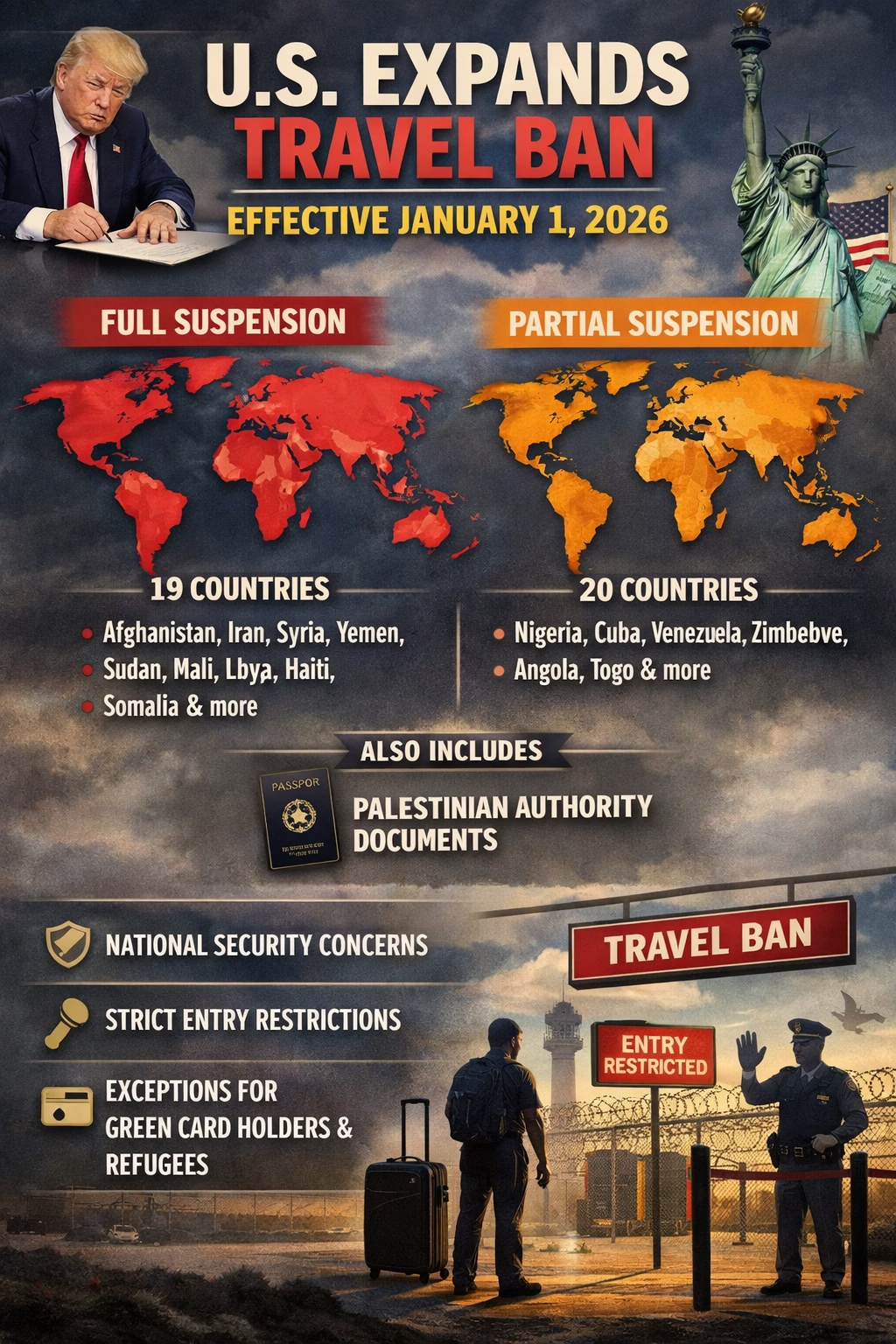
The United States has expanded its travel restrictions, adding citizens from seven more countries to its existing travel ban, effective January 1, 2026. President Donald Trump signed the proclamation on December 16, 2025, significantly widening limits on entry into the US for foreign nationals from 39 countries, including individuals travelling on documents issued by the Palestinian Authority (PA).
The latest order builds on a June 4, 2025 proclamation, which had imposed restrictions on foreign nationals from 19 countries. Under the revised framework, 19 countries will face a full suspension of entry, while 20 countries will be subject to partial suspension.
The administration stated that the restrictions are aimed at addressing national security and public safety concerns, citing deficiencies in screening and vetting systems of the affected countries.
Legal basis for the travel restrictions
The proclamation invokes two provisions of US immigration law:
- Section 212(f) of the Immigration and Nationality Act (INA), which authorises the President to suspend the entry of foreign nationals deemed detrimental to US interests
- Section 215(a) of the INA, which allows the President to regulate entry into and departure from the United States
Exceptions under the proclamation
The order clarifies that it does not apply to:
- Individuals already granted asylum in the United States
- Refugees who have been admitted into the country
- Individuals eligible to seek asylum, withholding of removal, or protection under the Convention Against Torture
Additionally, lawful permanent residents (Green Card holders) and dual nationals travelling on passports issued by non-designated countries are exempt from the restrictions.
Unlike the June proclamation, the December order removes blanket exemptions previously available to immediate relatives of US citizens, certain adoption-related cases, and Afghan Special Immigrant Visa (SIV) holders.
Countries under partial suspension
The partial suspension list has expanded from seven to 20 countries, including:
Angola, Antigua and Barbuda, Benin, Burundi, Côte d’Ivoire, Cuba, Dominica, Gabon, The Gambia, Malawi, Mauritania, Nigeria, Senegal, Tanzania, Togo, Tonga, Turkmenistan, Venezuela, Zambia, and Zimbabwe.
Countries under full suspension
By January 1, 2026, entry will be fully suspended for nationals from the following countries who do not hold a valid US visa:
Afghanistan, Burkina Faso, Burma, Chad, Republic of the Congo, Equatorial Guinea, Eritrea, Haiti, Iran, Laos, Libya, Mali, Niger, Sierra Leone, Somalia, South Sudan, Sudan, Syria, and Yemen.
The order also applies to individuals travelling on Palestinian Authority-issued documents.
The December proclamation lifts restrictions on non-immigrant travel from Turkmenistan, although immigration from the country remains suspended. Laos and Sierra Leone were upgraded from partial to full suspension.
No sunset clause
The proclamation does not specify an expiration date. It directs the Secretary of State, in coordination with other officials, to submit a review every 180 days assessing whether the restrictions should be continued, modified, or lifted.
