
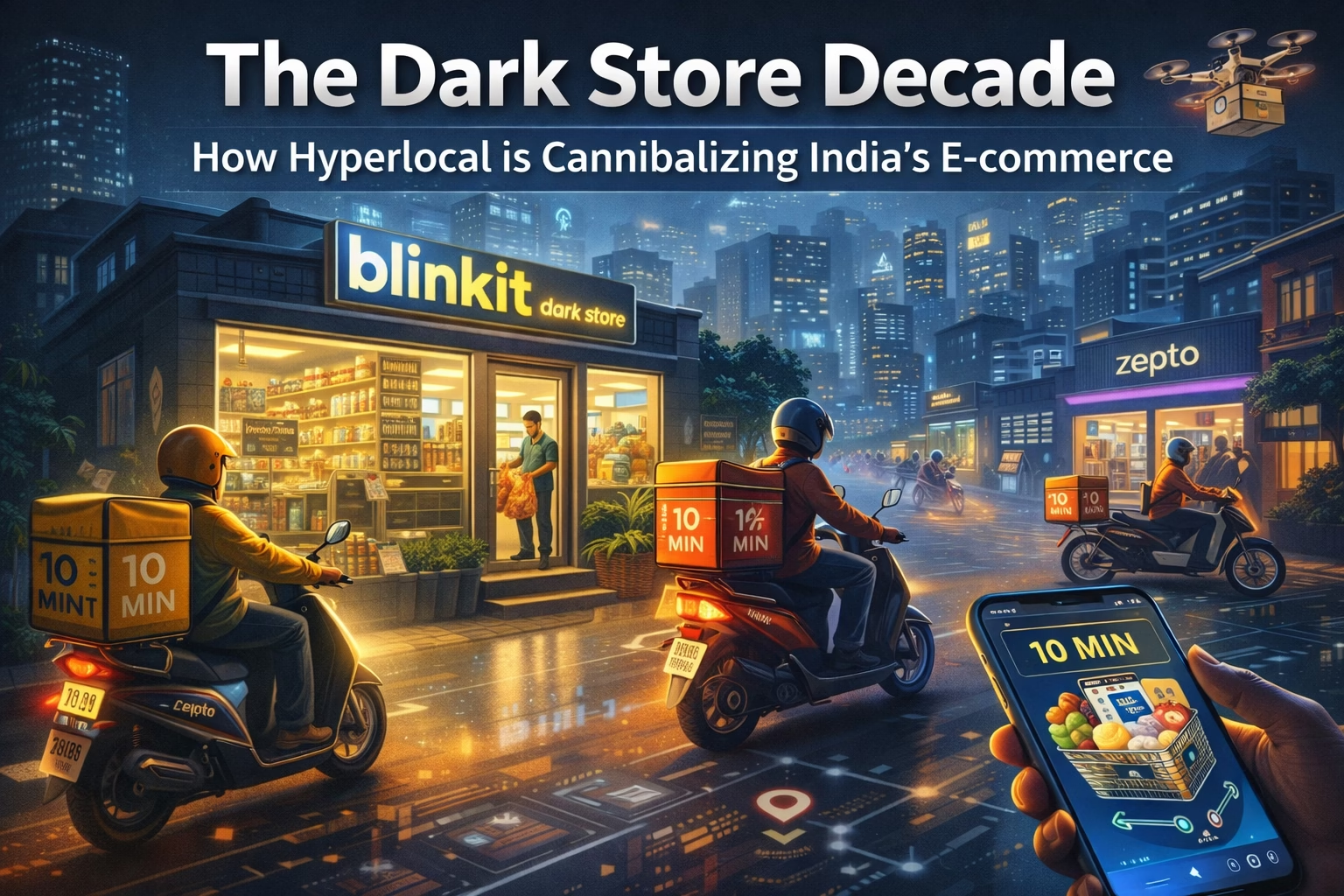
By 2026, “e-commerce” in India no longer means waiting days for a delivery. The rise of Quick Commerce (Q-commerce) has transformed 10-minute delivery from a novelty into an urban utility—reshaping consumer behaviour, real estate economics, and the very definition of retail.
What began with groceries has evolved into an aggressive race for “everything, instantly”—from smartphones and gaming consoles to beauty, fashion, and medicines.
1. The Infrastructure Engine: 5,000+ Dark Stores Powering Speed
At the heart of Q-commerce lies the dark store—compact, high-velocity fulfilment hubs embedded deep inside residential neighbourhoods.
- Scale: Industry estimates suggest India now has 5,000–5,500 dark stores, led by Blinkit, Zepto, and Swiggy Instamart.
- Leaders: Blinkit has crossed the 2,000-store mark, while Zepto and Instamart operate 1,000+ stores each.
- Real estate shift: The most valuable retail asset in 2026 is no longer a high-street showroom, but a 3,000 sq. ft. warehouse with fast two-wheeler access in dense urban clusters.
Speed, not footfall, defines value.
2. The Profitability Turn: From Cash Burn to Contribution Margins
Once criticised as unsustainable, Q-commerce has entered a critical inflection point.
- Mature dark stores (18+ months) are reporting 6–7% contribution margins.
- AOV expansion: Average order values have risen from ~₹400 in 2024 to ₹700–₹800 in 2026, driven by electronics, premium beauty, and D2C brands.
- Advertising flywheel: Platforms now earn 3–5% of revenues from in-app brand placements and search ads—mirroring Amazon’s high-margin ad model.
The economics are no longer built on milk alone.
3. Category Expansion: Beyond Groceries
Q-commerce has decisively broken out of its grocery cage.
- Electronics: Smartphones, gaming consoles, laptops, and accessories are now delivered within minutes.
- Fashion & beauty: Tie-ups with players like Nykaa and Myntra (via M-Now) enable instant fashion fulfilment.
- Pharmacy: OTC and prescription medicines are seeing rapid adoption, directly challenging legacy e-pharmacies.
In 2026, urgency—not browsing—drives purchases.
4. Cannibalisation Effect: Pressure on Traditional E-commerce
The most disruptive shift is behavioural.
- Q-commerce now accounts for ~20% of India’s e-retail GMV (industry estimates).
- It dominates impulse, urgent, and lifestyle purchases, while marketplaces retain planned, bulky buying.
- Amazon and Flipkart have responded with Amazon Now and Flipkart Minutes, underscoring the threat.
| Aspect | Traditional E-commerce | Quick Commerce |
|---|---|---|
| Delivery | 24–48 hours | 10–20 minutes |
| Inventory | Centralised | Neighbourhood |
| SKUs | Millions | 5,000–10,000 |
| Intent | Planned | Impulse / Urgent |
5. The Bharat Push: Tier-2 Cities Join the Race
The next growth wave is unfolding beyond metros.
Cities like Jaipur, Coimbatore, Lucknow, and Vijayawada are witnessing faster store-level breakeven due to:
- Lower rents
- Dense residential layouts
- Rising aspirational consumption
In many Tier-2 markets, dark stores reach profitability 30% faster than in metros.
Conclusion: The New Retail Default
India no longer “shops” for essentials—it replenishes them in real time. As Q-commerce platforms approach EBITDA breakeven by late 2026, the debate has shifted from viability to survival.
The dark store is no longer an experiment.
It is the default infrastructure of urban Indian retail.
