
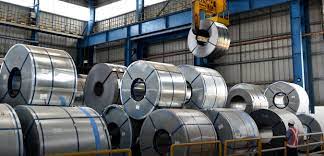
India’s decision to impose a three-year safeguard duty on select steel products is expected to provide meaningful relief to domestic steelmakers such as JSW Steel, Tata Steel and Jindal Steel, by curbing low-priced imports and creating room for price increases in the coming quarters, industry experts and analysts said.
On December 30, the government imposed a safeguard duty ranging between 11% and 12% on certain steel imports to counter dumping, particularly from China. The duty will be levied at 12% in the first year, 11.5% in the second, and 11% in the third year, according to a finance ministry notification. While imports from some developing countries are exempt, shipments from China, Vietnam and Nepal will attract the levy.
The safeguard duty covers key flat steel products such as hot-rolled coils, cold-rolled coils, plates, and coated steel, which together account for nearly 60% of India’s steel imports. These products are widely used across sectors including automobiles, construction, shipbuilding, appliances, furniture and heavy engineering. Certain strategic products such as CRGO electrical steel and stainless steel have been excluded to ensure uninterrupted supply for renewable energy and transmission projects.
Analysts believe the move will significantly reduce steel imports, with estimates suggesting a 20–25% decline in imports in FY26 and FY27, according to market analytics firm BigMint. While imports may not stop entirely, the duty is expected to tilt the balance in favour of domestic producers.
The steel industry has welcomed the decision, which follows a temporary 200-day safeguard duty imposed earlier this year. Industry bodies have long argued that persistent dumping by overseas producers, particularly Chinese manufacturers, has hurt domestic capacity utilisation and pricing power.
Naveen Jindal, Chairman of Jindal Steel and President of the Indian Steel Association, said the measure would help stabilise the domestic market while supporting India’s infrastructure-led growth. He added that further trade remedies may be required if global overcapacity continues to pressure the Indian steel value chain.
From a pricing perspective, analysts expect the safeguard duty to provide mills with leverage to sustain price hikes. Rising input costs—such as a $10–15 per tonne increase in coking coal prices over the past month—and a weaker rupee have strengthened the case for higher steel prices. Market experts estimate an additional ₹1,000–1,500 per tonne price increase may be feasible, although sharp hikes could face resistance as prices have already risen by ₹2,000–2,500 per tonne since October.
Despite the relief, India is expected to remain a net steel importer. While steel imports declined 13.5% year-on-year between January and November 2025, exports also fell amid weak global demand and intensifying competition.
Overall, the safeguard duty is seen as a near-term positive for domestic steelmakers, improving pricing stability and protecting margins as demand from automobiles and construction firms up post-monsoon.
Disclaimer
This news article is for informational purposes only and does not constitute investment advice.
