
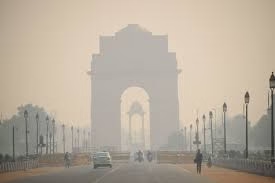
New Delhi air quality continued to remain in the ‘very poor’ category on Sunday, with the Central Pollution Control Board (CPCB) recording an overall Air Quality Index (AQI) of 390.
Data from the CPCB’s Sameer App showed that 19 air quality monitoring stations across the national capital slipped into the ‘severe’ category, underlining the worsening pollution situation in several pockets of the city.
An earlier forecast indicated that air quality is unlikely to improve in the coming days and may continue to hover in the very poor range.
Dense Fog Likely, Orange Alert Issued for Monday
Adding to the concerns, the India Meteorological Department (IMD) has issued an orange alert, warning of very dense fog across Delhi on Monday, which could significantly impact visibility and commuting conditions.
According to the weather department, maximum and minimum temperatures on Monday are expected to be around 22°C and 7°C, respectively.
On Sunday, Delhi recorded a minimum temperature of 6.3°C, about 0.5°C below the seasonal average, while the maximum temperature touched 22.5°C, around 2.1°C above normal, IMD data showed.
Notably, humidity levels touched 100% at around 5:30 pm on Sunday, contributing to the formation of dense fog and trapping pollutants close to the surface.
Local Hotspots See ‘Severe’ Pollution Levels
While the citywide average remained in the very poor range, pollution levels were significantly worse in specific areas.
- Anand Vihar recorded the highest AQI at 457, firmly in the ‘severe’ category
- Most other stations remained in the very poor range
Delhi had witnessed brief improvement in air quality on Wednesday and Thursday, but pollution levels began rising again from Friday, with AQI readings edging close to the severe threshold.
Weather Conditions Trapping Pollutants
Experts attribute the persistent haze and smog to cold weather, calm wind conditions and dense fog, which prevent dispersion of pollutants and allow particulate matter to accumulate near ground level.
With the current meteorological conditions expected to persist, poor air quality is likely to continue, prompting renewed calls for stricter pollution-control measures and sustained monitoring.
AQI Categories Explained (As per CPCB)
- 0–50: Good
- 51–100: Satisfactory
- 101–200: Moderate
- 201–300: Poor
- 301–400: Very Poor
- 401–500: Severe
