
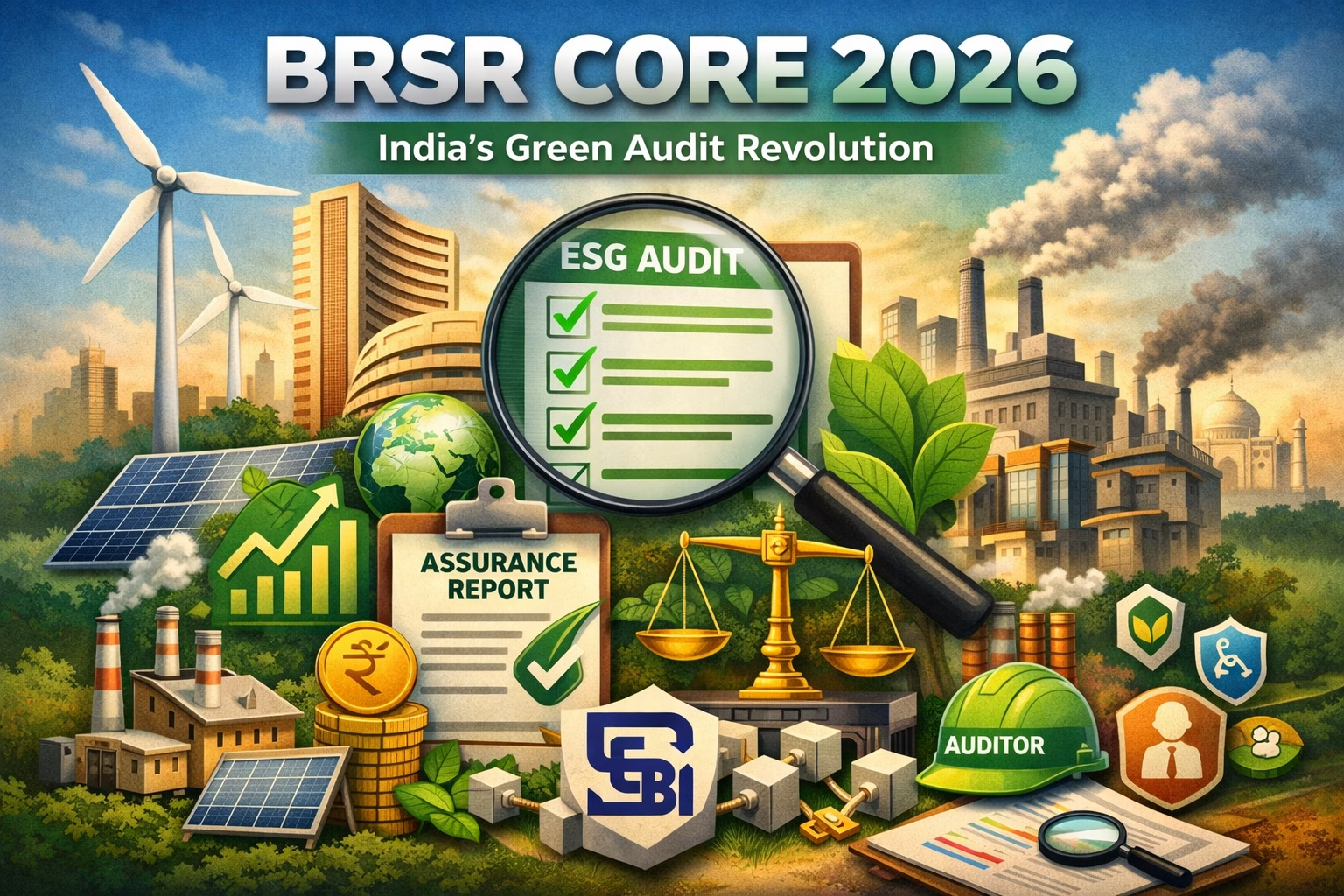
The Business Responsibility and Sustainability Reporting (BRSR) Core represents the most significant shift in Indian corporate transparency since the Companies Act, 2013. By 2026, sustainability reporting has evolved from a voluntary practice into a legal requirement, with SEBI treating ESG disclosures with the same weight as financial statements. Here’s a closer look at how the “Green Audit” landscape has transformed.
1. From Limited to Reasonable Assurance
Earlier, companies offered “Limited Assurance”—essentially a self-reported check by auditors. In 2026, SEBI mandates the Top 500 listed companies to obtain Reasonable Assurance.
- What it entails: Auditors now perform detailed physical verifications. For instance, a claimed 20% reduction in carbon emissions requires cross-checking electricity meters, fuel bills, and sensor data.
- Impact: Greenwashing is no longer tolerated. ESG spending is now a compliance cost, not a marketing expense.
2. The Nine Pillars of BRSR Core
The BRSR Core framework emphasizes quantifiable metrics over vague narratives. Auditors verify nine key aspects:
- Greenhouse Gas (GHG) Emissions: Scope 1 and Scope 2 intensity.
- Water Consumption: Total usage and discharge quality.
- Energy Footprint: Percentage of renewable energy in operations.
- Waste Management: Circular economy measures (recycle vs. landfill).
- Employee Wellbeing: Safety, median wages, and insurance coverage.
- Gender Diversity: Pay parity and management representation.
- Inclusive Development: CSR spending impact.
- Fairness in Services: Consumer privacy and fair pricing.
- Openness of Business: Transparency in lobbying and political contributions.
3. The Value Chain Challenge: MSMEs in the Spotlight
The most transformative aspect in 2026 is Value Chain Reporting. Top 250 listed companies must now report ESG metrics for suppliers and partners representing 75% of their purchase/sales value.
- Chain Reaction: Corporates like Tata Motors or Reliance now require vendors in hubs like Pune, Ludhiana, and Coimbatore to provide data on water usage, labor standards, and sustainability practices.
- Green or Out: MSMEs failing to provide ESG data risk being dropped from supply chains. Sustainability has become a mandatory prerequisite for doing business.
4. The Rise of Sustainability Auditors
The BRSR Core has given birth to a new class of professionals. ICAI and ICSI have introduced specialized Sustainability Auditor certifications.
- Audit Process: Verification now goes beyond paper trails, using IoT sensors, satellite imagery, and blockchain-based supply chain logs to ensure claims—like carbon credits or solar farm offsets—are authentic.
| Feature | 2024 Reality | 2026 Reality |
|---|---|---|
| Audit Type | Limited Assurance | Reasonable Assurance |
| Scope | Company operations only | Entire Value Chain |
| Liability | Reputational risk | SEBI penalties & personal liability |
| Data Source | Manual Excel sheets | Real-time ESG dashboards & IoT |
5. Executive Challenge: Is Your Board Ready?
For India’s 2026 boards, BRSR Core is a double-edged sword. While strong ESG reporting attracts foreign institutional investors, inaccurate or fraudulent reporting exposes companies to litigation and regulatory penalties. Boards must now combine strategic vision with rigorous oversight of sustainability data.
Conclusion:
The era of voluntary ESG reporting is over. Indian corporates now operate under a Green Audit regime that demands accountability, transparency, and actionable sustainability practices across their operations and supply chains. The question for 2026: Are boards ready to meet the challenge?
